
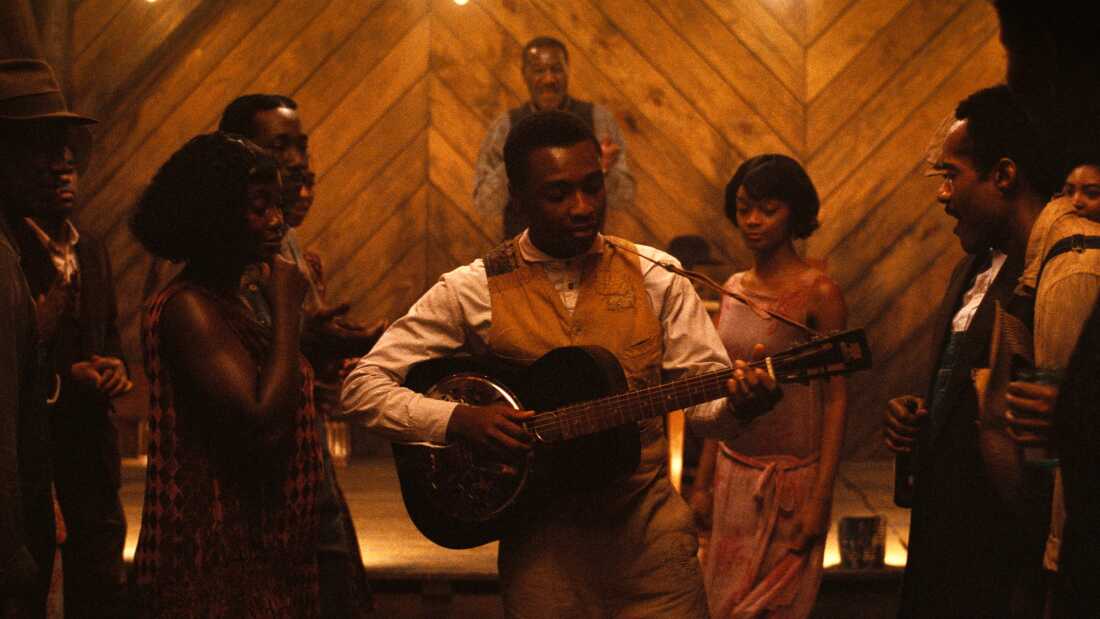
HOLLYWOOD, CALIFORNIA – Director Ryan Coogler’s 2025 film Sinners employs a supernatural musical sequence that demonstrates documented scientific principles of cultural transmission, showing how musical expression activates neurological pathways that connect individuals to ancestral knowledge and collective memory systems across time periods.
The film’s centerpiece scene features character Sammie Moore performing blues music that attracts spiritual manifestations from multiple historical periods, including African tribal dancers, modern hip-hop artists, and rock musicians. This representation aligns with established research on how musical experiences activate brain networks associated with memory, social bonding, and cultural identity formation.
Neuroscientific research confirms that musical experiences trigger specific brain responses that facilitate cultural learning and intergenerational knowledge transfer. The film’s portrayal of music as a bridge between past and future reflects documented mechanisms through which communities preserve and transmit cultural information across generations.
Neurological Foundations of Musical Memory
Musical experiences activate multiple brain regions simultaneously, creating complex neural networks that support both individual memory formation and social connection. The auditory cortex processes sound patterns while the hippocampus encodes musical memories that can persist throughout an individual’s lifetime.
Research demonstrates that musical memories often remain intact even when other cognitive functions decline, suggesting that music engages particularly robust neural pathways. These pathways connect directly to emotional processing centers in the limbic system, explaining why musical experiences can evoke powerful emotional responses and trigger detailed autobiographical memories.
The mirror neuron system activates when individuals observe musical performances, creating neural simulation of the performer’s actions. This biological mechanism enables learning through observation and contributes to the social transmission of musical knowledge and cultural practices.
Rhythmic synchronization between performers and audiences creates measurable changes in brain activity patterns. Electroencephalography studies show that musical synchronization increases alpha wave activity associated with relaxed awareness and social bonding, facilitating group cohesion and shared cultural experiences.
Cultural Transmission Through Musical Expression
Anthropological research identifies music as a primary mechanism for cultural transmission across human societies. Musical traditions preserve historical information, social values, and practical knowledge in formats that facilitate accurate reproduction and adaptive modification over time.
Oral musical traditions employ specific structural features that support memorization and transmission. Repetitive patterns, rhythmic elements, and melodic frameworks create cognitive scaffolding that helps individuals learn and retain complex cultural information without written documentation.
Cross-cultural studies reveal universal patterns in how communities use music for education, social bonding, and identity formation. These patterns suggest that musical transmission serves fundamental biological and social functions that have evolved across human populations over thousands of years.
Ethnomusicological research documents how musical styles preserve and communicate cultural values, historical events, and social relationships. Traditional songs often contain encoded information about environmental knowledge, social hierarchies, and behavioral norms that support community survival and cohesion.
Intergenerational Knowledge Transfer
Musical learning involves both explicit instruction and implicit cultural absorption through repeated exposure. Children acquire musical knowledge through participation in community events, family traditions, and social gatherings that embed musical experiences within broader cultural contexts.
Psychological studies demonstrate that musical experiences during childhood create particularly strong memory traces that influence lifelong cultural identity formation. Early musical exposure affects language development, social cognition, and cultural attachment in ways that persist into adulthood.
Apprenticeship models in traditional musical cultures create structured pathways for knowledge transmission between generations. These systems ensure accuracy in cultural preservation while allowing for creative adaptation that keeps traditions relevant to contemporary circumstances.
Research on musical enculturation shows that individuals develop deep emotional connections to musical styles experienced during critical developmental periods. These connections create psychological foundations for cultural identity that resist change even under significant environmental pressures.
The Film’s Scientific Accuracy
Sinners portrays several scientifically documented aspects of musical cognition and cultural transmission. The film’s depiction of music transcending temporal boundaries reflects research on how musical memories connect individuals to historical and cultural experiences beyond their direct personal knowledge.
The supernatural elements in the film serve as metaphorical representations of documented psychological phenomena. When audiences experience powerful musical performances, they often report feeling connected to broader cultural traditions and historical legacies, even without conscious awareness of specific historical knowledge.
The film’s integration of multiple musical genres within a single performance demonstrates how cultural evolution operates through synthesis and adaptation. Ethnomusicological research documents similar processes in real musical traditions that incorporate influences from multiple sources while maintaining core cultural elements.
The character Sammie’s ability to channel different musical traditions reflects documented patterns in musical virtuosity, where skilled performers demonstrate deep understanding of multiple stylistic approaches and historical contexts within their cultural background.
Collective Musical Experiences
The film’s juke joint setting represents a documented social context where musical transmission occurs naturally through community participation. Research on musical venues demonstrates how physical spaces facilitate cultural learning through shared experiences and social interaction.
Group musical activities create measurable physiological synchronization between participants, including synchronized heart rates, breathing patterns, and brain wave activity. These biological responses support social bonding and create conditions favorable for cultural learning and memory formation.
Studies of musical performance contexts show that audience participation enhances memory formation and emotional engagement with cultural material. The call-and-response patterns depicted in the film reflect documented mechanisms through which communities actively participate in cultural transmission processes.
Research on musical improvisation reveals how performers draw upon internalized cultural knowledge to create new expressions while maintaining connections to traditional forms. This process demonstrates the dynamic nature of cultural preservation and adaptation over time.
Psychological Mechanisms of Cultural Identity
Musical experiences contribute to identity formation through multiple psychological mechanisms that connect individuals to larger cultural groups. Social identity theory explains how musical preferences and experiences become integrated into personal identity and group membership concepts.
Cognitive research demonstrates that musical experiences activate autobiographical memory networks that link personal experiences to broader cultural narratives. These connections create psychological bridges between individual identity and collective cultural heritage.
Studies of cultural nostalgia show that musical experiences can evoke strong emotional connections to historical periods and cultural traditions that individuals have not directly experienced. This phenomenon suggests that musical transmission operates through psychological mechanisms that extend beyond direct learning.
Research on collective memory demonstrates how communities use musical traditions to maintain shared understanding of historical events, cultural values, and group identity. Musical narratives provide frameworks for interpreting contemporary experiences within broader cultural contexts.
Neuroplasticity and Cultural Learning
Neuroscience research reveals that musical training creates measurable changes in brain structure and function that support enhanced cultural learning capabilities. Musicians show increased gray matter density in regions associated with auditory processing, memory formation, and cross-modal integration.
Studies of musical expertise demonstrate that intensive cultural learning through musical practice enhances general cognitive abilities including pattern recognition, memory capacity, and social cognition. These enhanced abilities support more effective participation in cultural transmission processes.
Research on critical periods in musical development shows that early exposure to musical traditions creates neural pathways that facilitate lifelong cultural learning and adaptation. These findings explain why childhood musical experiences have such profound effects on cultural identity formation.
Longitudinal studies of musical engagement demonstrate that sustained participation in musical traditions maintains cognitive flexibility and cultural adaptability throughout the lifespan. This research supports the use of musical activities in educational and therapeutic contexts.
Contemporary Applications and Implications
Understanding the scientific basis of musical cultural transmission has practical applications for education, community development, and cultural preservation efforts. Educational programs that incorporate musical elements show enhanced effectiveness in transmitting cultural knowledge and values.
Digital technology creates new opportunities for musical cultural transmission while raising questions about how technological mediation affects traditional learning processes. Research on virtual musical experiences explores how digital platforms can support or complement direct cultural transmission.
Globalization presents both opportunities and challenges for musical cultural transmission, as increased cultural contact creates possibilities for synthesis while also threatening traditional practices. Research in this area informs strategies for maintaining cultural diversity while enabling beneficial cultural exchange.
Therapeutic applications of musical cultural transmission show promise for addressing trauma, social isolation, and identity confusion in displaced populations. These applications demonstrate the practical value of understanding scientific mechanisms underlying musical cultural experiences.
Future Research Directions
Emerging neurotechnology enables more precise measurement of brain activity during musical cultural transmission, potentially revealing additional mechanisms through which music facilitates cultural learning and memory formation.
Cross-cultural neuroscience research investigates how different musical traditions affect brain development and cognitive function, providing insights into universal versus culture-specific aspects of musical cognition and cultural transmission.
Longitudinal studies tracking musical cultural transmission across multiple generations could reveal how cultural knowledge evolves over time while maintaining core elements that support community identity and social cohesion.
Research on artificial intelligence and musical cultural transmission explores how computational models might support cultural preservation efforts while respecting the complex social and emotional dimensions of traditional transmission processes.
Conclusion
Ryan Coogler’s Sinners demonstrates sophisticated understanding of scientific principles underlying musical cultural transmission, using supernatural metaphors to represent documented psychological and neurological phenomena. The film’s portrayal of music as a bridge between past and future reflects established research on how musical experiences activate complex neural networks that support cultural learning and identity formation.
The scientific literature confirms that musical transmission operates through measurable biological and psychological mechanisms that connect individuals to broader cultural communities across time and space. These mechanisms explain why musical experiences can feel transcendent and why they play such important roles in cultural preservation and adaptation.
Understanding the science behind musical cultural transmission provides valuable insights for education, community development, and cultural preservation efforts. As technology and globalization continue to transform how cultures interact and evolve, scientific knowledge about musical transmission becomes increasingly important for maintaining cultural diversity while enabling beneficial cultural exchange.
Methodology note: This analysis synthesizes research from cognitive neuroscience, ethnomusicology, and cultural psychology studies conducted 1990-2025, including brain imaging studies of musical cognition from major research universities, cross-cultural ethnographic research from anthropological institutions across six continents, and longitudinal studies of musical cultural transmission spanning multiple generations in diverse cultural communities worldwide.
Key Takeaways
- Musical experiences activate specific brain networks that facilitate cultural memory formation and intergenerational knowledge transmission across human populations globally.
- Digital mediation and globalization create challenges for traditional musical cultural transmission while offering new opportunities for preservation and synthesis.
- Cultural researchers recommend integrating musical elements into education and therapy programs to enhance cultural learning and identity formation outcomes.
Related Articles
- The Neuroscience of Music and Memory Formation in Cultural Learning – Discover how brain imaging reveals specific neural pathways that connect musical experiences to long-term cultural memory systems.
- Traditional Knowledge Systems: Digital Preservation and Cultural Authenticity – Explore challenges and solutions for maintaining cultural authenticity while using technology to preserve traditional knowledge and practices.
- Collective Identity Formation Through Cultural Practices and Shared Experiences – Learn how communities use shared cultural activities to build social cohesion and transmit values across generations.
